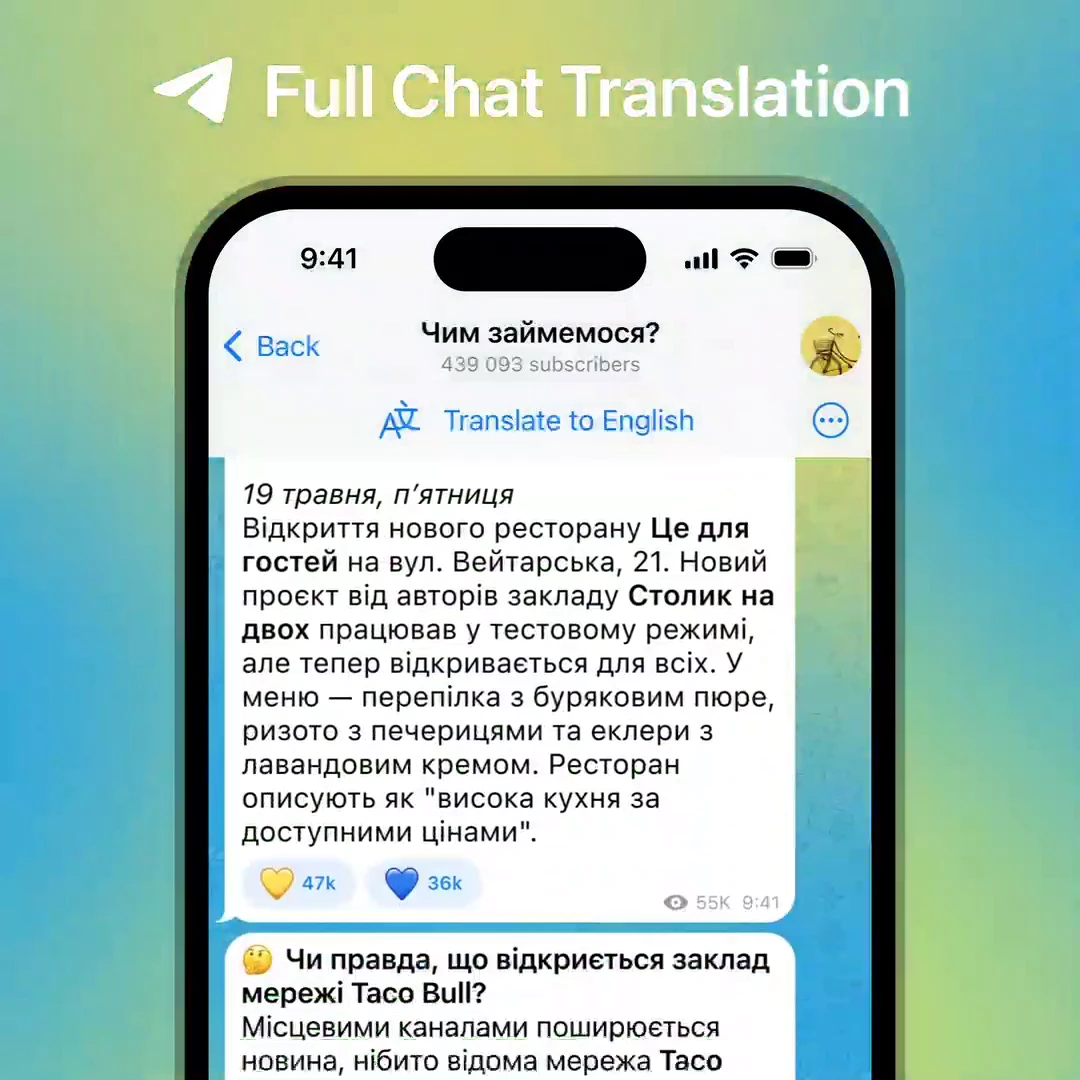
How to Use Telegram Real-Time Chat Translation: Floating Language Bars, Dynamic Scroll Streaming & MTProto Translation Pipelines
Translation can be left on for a whole conversation. Every message that arrives is rendered into your language as it appears, and you reply in yours while they read in theirs.
That makes a genuinely bilingual chat possible, and it introduces a failure mode that only exists when both people are relying on it.
What you will be able to do
- check_circle Keep a conversation translated continuously.
- check_circle Write in a way that survives being translated.
- check_circle Catch the errors that matter before acting on them.
- check_circle Know what leaves the chat when you use it.
With the bar on, messages arrive already translated and the original stays one tap away.
translate Two people, two languages, one conversation
Each side turns it on for themselves. Nothing is negotiated and nothing is announced — they may not know you are reading a translation, and you may not know they are.
That works remarkably well for ordinary conversation and creates a specific risk when it fails: a mistranslation looks exactly like a strange thing for somebody to have said. Before concluding that a colleague has been rude or has agreed to something surprising, tap through to the original.
Writing for it is a real skill and a short one. Short sentences, one idea each, plain words, no idiom and no sarcasm. That is also how to write clearly in general, so nothing is lost by it.
A message from somebody you get on with arrives reading blunt, and slightly rude. What is the most likely explanation?
Politeness markers are the first thing to disappear between languages, and a level of directness that is entirely normal in one reads as brusque in another. The machine cannot adjust for that and does not try. Assume the translation before you assume the person — and asking what they meant is always available and never the wrong move.
Which of these is most likely to arrive meaning what you meant?
One idea per sentence, in plain words, with the date written rather than described. Idiom does not survive, understatement frequently inverts, and a politely negative construction can come out the other way round entirely. Long sentences with clauses inside them are where translation loses the thread; short ones give it nothing to lose.
A translated message contains a price and a deadline. What is worth doing?
Seeing the original is one tap and it catches nearly everything; repeating the agreement back and asking them to confirm catches the rest. Two short messages are cheap insurance against the one category of error that costs money. Negations invert surprisingly often, so any sentence whose meaning turns on a "not" deserves the same treatment.
You are in a secret chat with somebody who writes in another language. Should you translate their messages?
For any confidential conversation that is a copy you did not intend to make, and in a secret chat it defeats the entire purpose — the point of that chat is that the words exist on two devices and nowhere else. The honest options there are agreeing a common language or accepting a slower conversation.
task_alt
settings Running a bilingual chat
- Turn translation on for the chat From the bar at the top.
- Mark your own languages as known So it only appears where it is needed.
- Write one idea per sentence In plain words.
- Type dates, numbers and names Rather than describing them.
- Tap through to the original for anything important Especially negations.
- Leave it off in confidential and secret chats Entirely.
This page is two people in different languages. The curriculum step is a whole audience in several: writing posts that translate cleanly, dual-language formatting, regional structure, and the conventions that keep a global community readable to all of it.
Chat translation at a glance
Each side turning it on, writing so it survives, checking numbers and negations, misreading tone, and the privacy limit, on one page. Tap to open it at full resolution.